 April 16, 2026 |
7 min Read
April 16, 2026 |
7 min ReadHow Long Should Student Verification Take?
How long does student verification take? It’s a question that not enough businesses ask when they’re setting up an academic discount or gated offer — but it might be the single most important question they should be asking.
Because the honest answer isn’t just “it depends on the method.” It’s that verification speed has a direct, measurable impact on whether your student customers complete a purchase at all.
Verification Delays and Conversion: What the Data Says
Any extra step added to a checkout or account signup process increases friction. And friction, as every marketer knows, costs you customers.
Cart abandonment has been climbing steadily for over a decade. As of 2026, the average abandonment rate sits above 70% — meaning for every ten potential customers who add something to their cart, more than seven leave without buying.
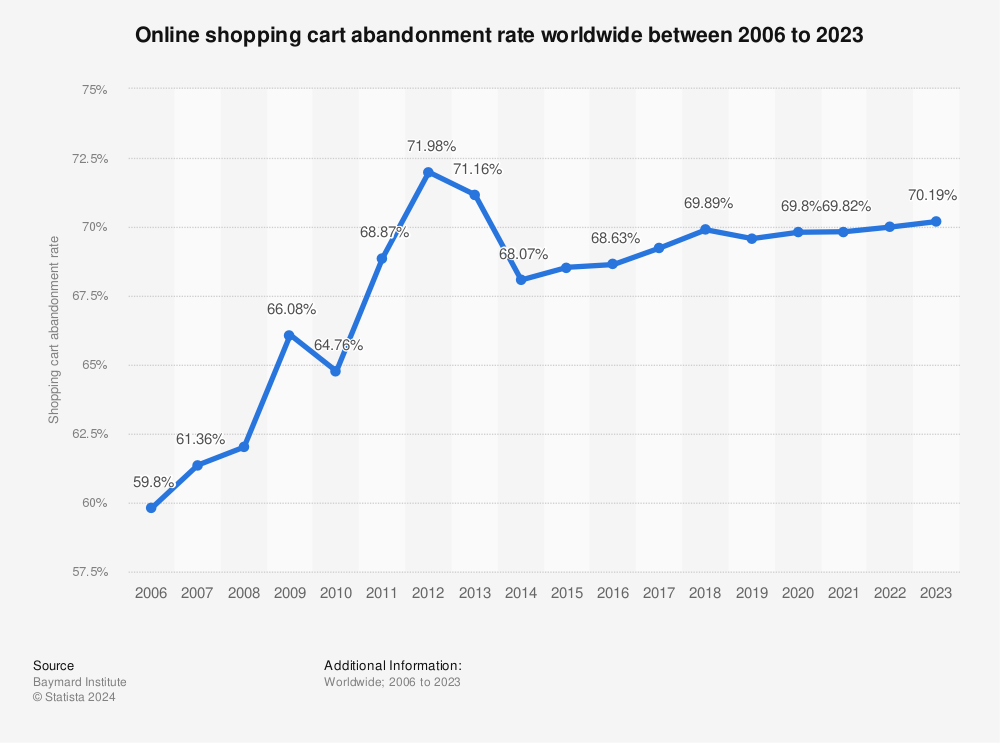
Find more statistics at Statista
Now add a verification step that asks a student to dig out their student ID, upload a document, and wait for a human to review it. The abandonment rate climbs further. You’ve taken a motivated customer — someone who actively sought out your student offer — and made it harder for them to redeem it.
The good news is that it doesn’t have to be this way. The Baymard Institute estimates that large ecommerce sites can recover up to 35% of lost conversions through checkout design improvements alone. Verification speed and simplicity is one of the biggest levers in that equation.
The Different Verification Methods — and How Long They Actually Take
Not all student verification is equal, and the time difference between methods isn’t marginal — it’s the difference between instant and next-day.
Single Sign-On (SSO) through academic institutions is the fastest approach available. The student authenticates using their existing university login — the same credentials they use for student email, the library portal, their course management system. The institution confirms active enrollment in real time. From the student’s perspective, the process takes seconds. From the business’s perspective, it’s automated and requires no human review.
For a business, this is the hardest method to implement on their own. This requires relationships with schools and technical integrations that need maintenance — not something most marketing, customer service, or even IT teams can take on without a dedicated partner.
Academic email verification is a step slower. The student enters their institution-provided email address, receives a verification link, and clicks it. In practice, this takes no more than a couple of minutes — longer if the student isn’t checking email in real time, or if the email ends up in a spam folder. It’s easy to implement, but it comes with a meaningful caveat: some institutions don’t provide their students with an email address and those that do might allow those students to maintain their email address for life.
Many businesses that are doing verification on their own will implement .edu email address checks. Sure, this might be better than nothing or a purely manual process, but it only scratches the surface and will exclude a significant portion of students — particularly those outside North America. A good verification partner maintains their own database of academic domains and knows which are restricted to active students — giving you coverage that a simple .edu check never could.
Manual document review is the slowest option by a significant margin. The student uploads a document — a student ID, enrolment letter, tuition receipt — and a human agent reviews it. Turnaround time ranges from a few minutes to 24 hours depending on review volume and staffing. For students in the middle of a checkout flow, even a 10-minute wait is often enough to lose the sale entirely.
The method you choose doesn’t just affect your fraud rate — it directly shapes the student experience. A student who hits a verification wall at checkout may not come back.
What to Look for in a Verification Service
Speed matters. But it isn’t the only thing worth evaluating. The best verification services get speed and accuracy and privacy right simultaneously — and the three are more connected than they might seem.
Real-time verification. Look for a service that confirms status at the moment of checkout, not hours later. Asynchronous review processes create a broken experience: the student doesn’t get their discount immediately, which often means they don’t bother returning to redeem it.
Institutional coverage. SSO-based verification only works as well as the network behind it. A service integrated with thousands of institutions globally will cover the vast majority of your student customers automatically. Ask vendors specifically about coverage for community colleges, international institutions, and vocational programmes — these are often where gaps appear.
Privacy-first architecture. Counterintuitively, the fastest verification methods are often also the most private. SSO confirmation means your business never sees a student’s credentials, documents, or sensitive personal data — the institution handles authentication and passes you only a confirmed status. This significantly reduces your compliance exposure under FERPA, GDPR, and equivalent regulations. A service that requires you to store or handle student documents introduces risk that SSO-based approaches avoid entirely.
Fallback handling. No single method covers every student. New enrolments may not yet appear in institutional databases; students at smaller institutions may not have SSO access; international students may require document review. A robust service layers these methods in order — attempting the fastest first, then falling back gracefully without losing the student from the flow.
Ask any prospective vendor: what happens when SSO fails? The answer tells you a lot about whether they’ve built for the real world or just the easy case.
How to Ensure Fast, Friction-Free Verification
The design of the verification experience matters as much as the technology behind it. A few principles that consistently separate high-converting academic programmes from low-converting ones:
Trigger verification early, not at payment. If a student has selected a student-priced product and is in the checkout flow, verify them before they reach payment — not at the last step. Discovering a verification hurdle at the payment screen is a conversion killer.
Don’t ask for more than you need. Data minimisation isn’t just a privacy best practice — it’s a conversion best practice. Every additional field or document you request is another opportunity for a student to abandon the process. A good verification service confirms status without requiring your business to collect or store sensitive data.
Work with a vendor that doesn’t remarket to students. Ask your verification partner if they use the data they collect about your users to remarket other offers to them. You’d be surprised to find that many services will do this. If they ask students to create a separate account with their platform, that’s usually a sign their business model depends on that data.
The goal is a verification experience that honest students don’t notice. The friction should be felt only by those attempting to abuse the programme — not by the students you’re trying to serve.
Frequently Asked Questions (FAQs)
Want to see faster student verification in action?
Contact us to learn how Proxi.id verifies students instantly at checkout — without adding friction.
Contact Us